Team Members: Benjamin Frailey, Lucca Mckay, Graeme Goss, Amelia Flatwood, Emily Zaretzky
Time Frame: One Semester, Fall of 2019
Project Brief: Our task is to identify an industry or service that is “declining” – receiving less attention than is has been in the past or losing revenue – and introduce new ideas and possibly new technology to help revitalize it. Originally, the emerging technology was the main focus of this project, but once we discussed this with team Avanade we came to the conclusion that innovation was more important than the technology.
We worked with team Avanade under the Experience Studio from Purdue’s user experience major. We had two sponsors from Avanade, Jackson and Wais, who were great to work with and helped lead us through the project throughout the semester. We would report to them frequently, and have a meeting once every tow weeks to discuss our progress and get their input. We also gave our final documentation to them.
Documentation:
Download it HERE
Scope
As we talked with the Avanade team, the project put less emphasis on the emerging technology, and we more focused just revitalizing a dying industry. We discussed a lot, and decided to work on Drive In Theaters. We worked within the ideas and scopes of themeing, comfort, and AV quality to come up with our final idea. We also mainly focused on a target user of college and high school students, those who wanted to have out of the ordinary social experiences with their friends.
Research
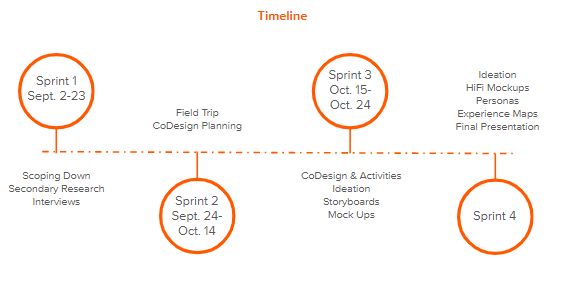
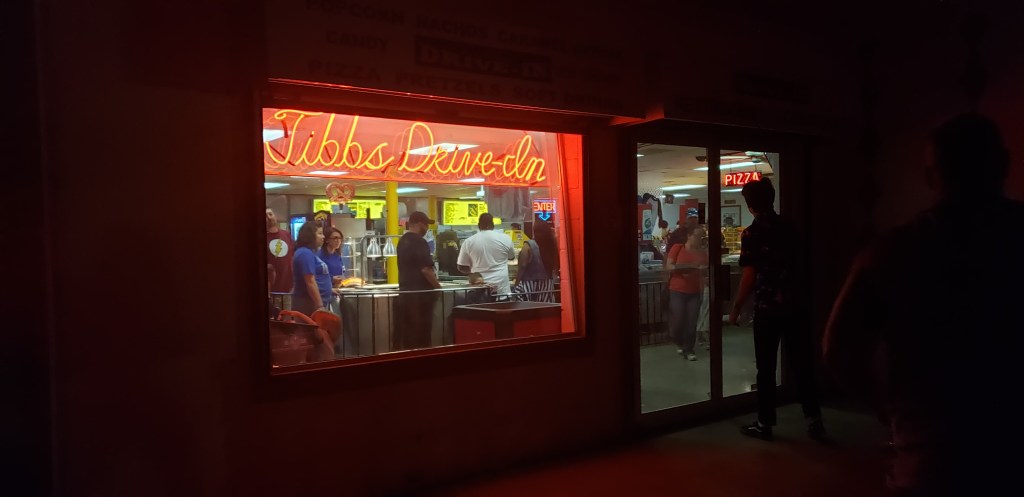
After we had our scope mostly settled, we started research fairly early. We had some secondary research to help in our and see what industries we should focus on, and then eventually to see what problems drive-in theaters were facing. From there we had some extensive interviews with 3 main groups: Older and Middle age people who went to Drive-In Theaters in their hay-day, youth who went as a kid, and the owners of a drive In. We interviewed the older and younger generations to get a feel for how drive-ins have changed over the years, both in their characteristics and the public’s perspective. We took a field trip to Tibbs Drive-In Theater in Indianapolis to get their thoughts as well, which was very eye opening. We learned that things like high cost for technology as well as trouble with said technology was a big struggle for them. However, they had taken steps like online advertising and themeing to compensate.
Ideation
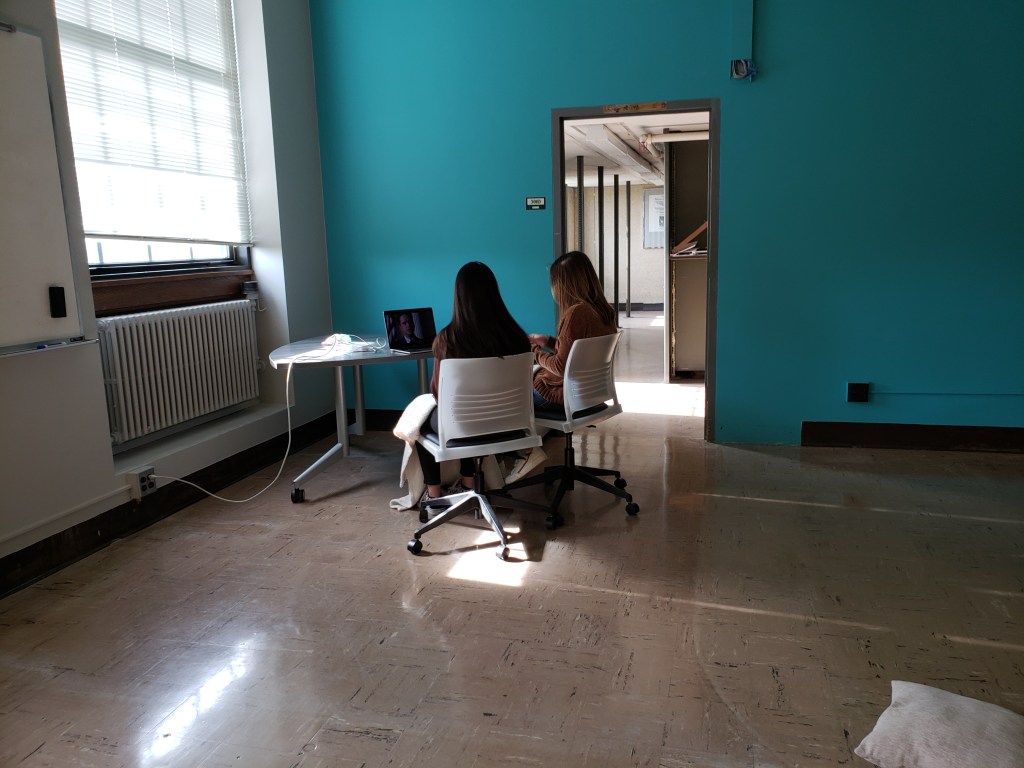
We did many things to ideate for this project. To start, we did a lot of sketching just to see how we might want to change up the Drive-In experience, but without much research that did not lead us much of anywhere. After we had some research and a better idea of our scope, we hosted a body storming session where we showed an audience some spooky TV episodes and experimented with themeing, then did Co-Design activities afterwards.. This was an important one as it helped guide us away from themeing and towards what users really seemed to care about; comfort. This lead us to further ideation with sketching with more of a purpose, the creation of digital mock-ups, and eventually a second body storming session. We used this to evaluate our new idea, and then took the takeaways from that to create our final design.
Main Solution
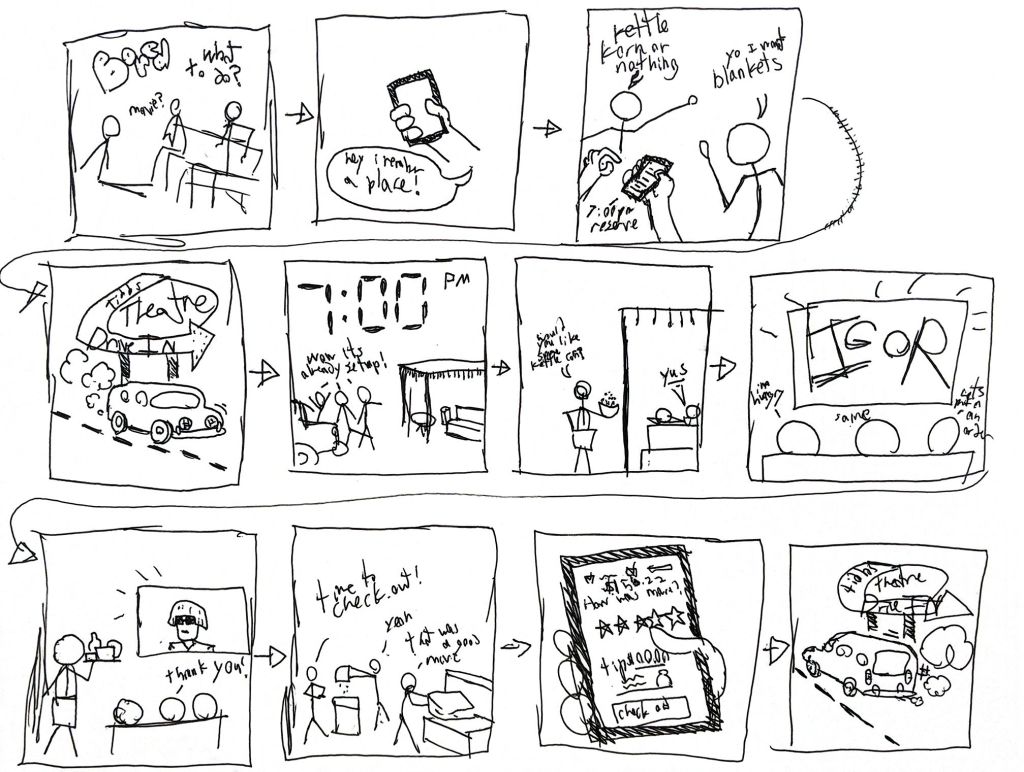
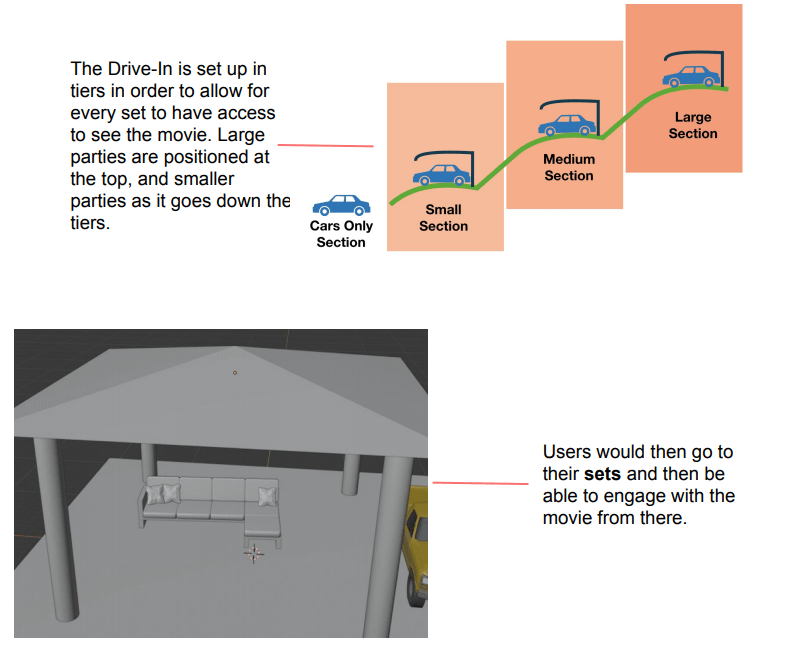
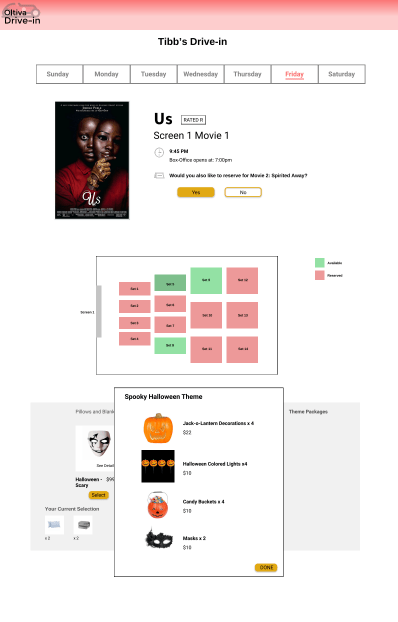
Our main solution was a new type of Drive in Theater, were patrons would leave their car and sit in an outside seating area personalized to them and their party’s liking. This was called a “set” and it would be customized ahead of time. The patrons would then arrive, get comfy, and watch the films from this set up. They could add couches, blankets, tables, decor, and more. During the movie then could order food and drink from either a kiosk or an app on their phone, and it would be brought out to their set for them during a low point in the movie. This allowed for a comfortable and stress-free outdoor movie going environment.
Leadership
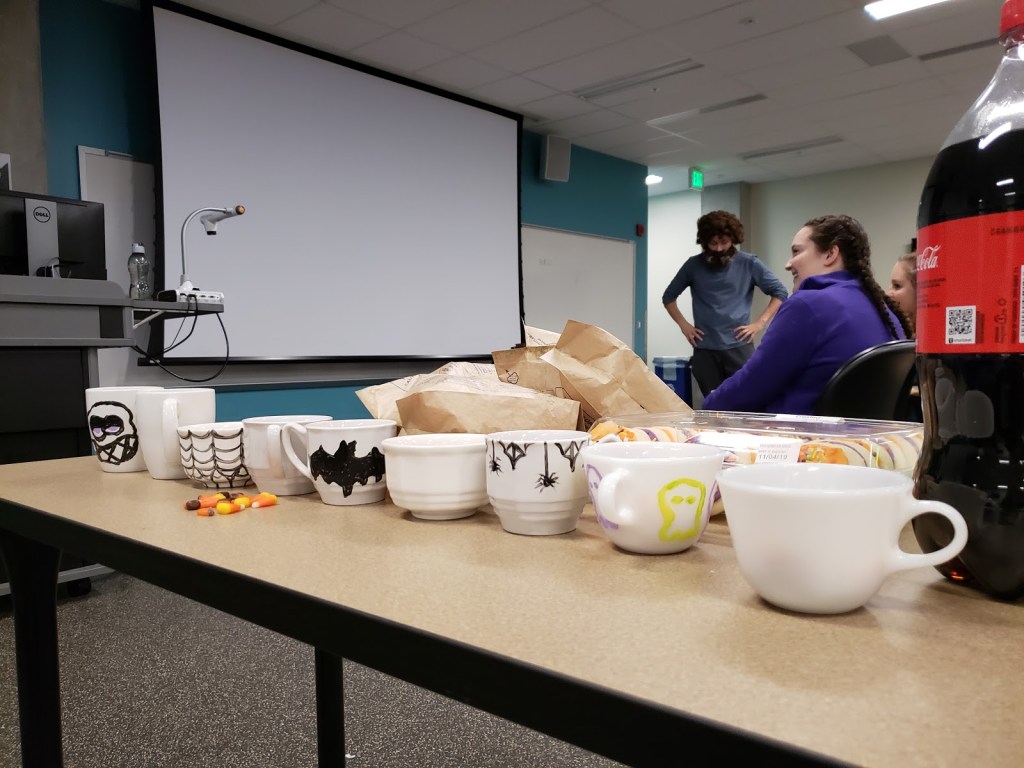
This semester, I felt more confident with my UX Skills, and with that felt more at home within a UX team. I feel like this allowed me to be a much greater part of the team than last semester. To account for team activities, I made sure I championed something, and that was documentation. It might sound like a cop-out, but I think documentation is really important. What’s the point of having a great idea if you can’t communicate to the client who will implement it. I made sure our sprints came together into one final documentation, and attached the strings between them to form a cohesive narrative. I also tried my best to upload any images, scans, or sketches to our project drive as soon as I could so the other members could use them for their documentation and presentation needs. Also, I helped a lot in championing our first bodystorming project. I first lead the idea of having a CoDesign where we would show video to the patrons, and though it evolved far past my initial idea I still feel proud for having the idea. With this feeling, I made sure to leave my impact on the CoDesign. I also made sure to get some of the special supplies for it, like themed and un-themed mugs that we used to gauge how the users responded to the theming.
Reflection
This semester working with Avanade was really cool and I really enjoyed be able to take on more leadership during this semester of experience studio. The activities we did were very fun, like the body storming sessions and the field trip, and we learned a lot from them as well. The team was great and we all had a lot of fun, and Avanade was a great sponsor and I really enjoyed the open ended project space they gave us.
 Benjamin's portfolio